Recognition and control gaps in advanced cardiovascular-kidney-metabolic syndrome among United States adults.
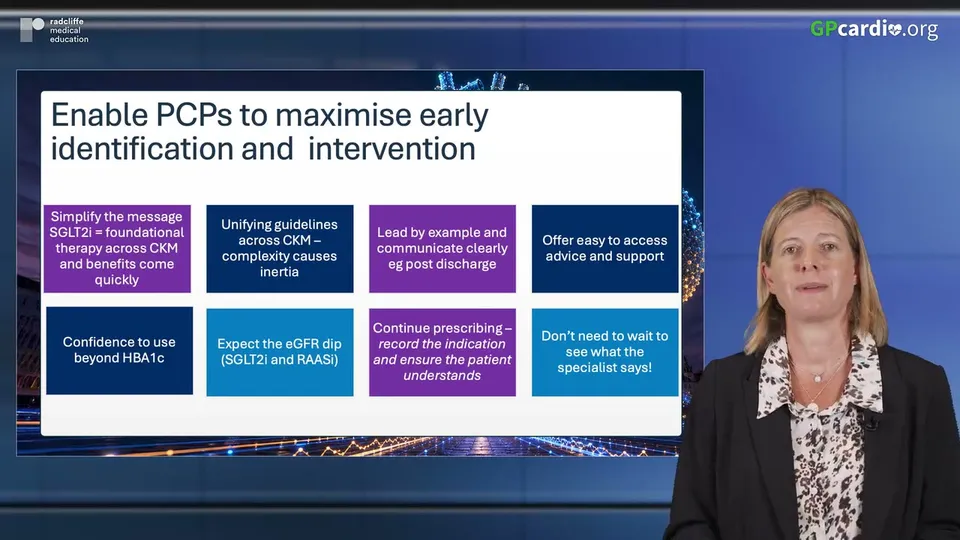
A cross-sectional analysis of NHANES data (n=5006 US adults) reveals that advanced cardiovascular-kidney-metabolic (CKM) syndrome (stages 3-4) affects 13.0% of the adult population. Among those with kidney abnormalities, 80.7% did not report it, while 58.7% had uncontrolled blood pressure (≥130/80 mmHg) and 56.0% had suboptimal glycemic control (HbA1c ≥7%). These findings highlight substantial gaps in recognition and risk factor management, underscoring the need for systematic screening and integrated cardiorenal-metabolic care in primary and specialist practice.
Objectives
To describe cardiovascular-kidney-metabolic (CKM) stages and condition-specific indicators among adults in the United States, with exploratory state profiles.
Methods
We analyzed 5006 United States adults aged ≥20 years in the National Health and Nutrition Examination Survey, August 2021-August 2023. Survey weights and condition-specific denominators were used. A stage-3 model developed among adults without reported cardiovascular disease was applied to the 2023 Behavioral Risk Factor Surveillance System.
Results
Advanced CKM (stages 3-4) affected 13.0% (95% confidence interval, 11.6%, 14.4%) of adults. Among advanced-CKM adults with a single-visit kidney abnormality, 80.7% did not report weak or failing kidneys. Within applicable subgroups, 58.7% had blood pressure ≥ 130/80 mm Hg and 56.0% had glycated hemoglobin ≥7%. Concurrent elevation affected 34.1% (95% confidence interval, 24.7%, 44.4%) of the fixed hypertension-plus-diabetes subgroup (91/277). Across 49 jurisdictions, the age-standardized modeled stage-3 contribution ranged from 4.4% to 6.5%; directly reported cardiovascular disease was presented separately.
Conclusions
National estimates describe frequent condition-specific abnormalities within advanced CKM, while the separate geographic projections provide exploratory surveillance context. Fixed thresholds do not establish individual treatment failure, and state projections require external validation.